
About Us
Why “Maximum Balance”?
Our world is inherently governed by the principle of balance. While imbalance may occur from time to time, in varying degrees and places, it is the overall state of equilibrium that has allowed life on Earth to endure.
Human beings, as integral components of this natural system, are also subject to this fundamental rule. From East to West, from Hippocrates—the father of Western medicine—to the Chinese Huangdi Neijing (The Yellow Emperor’s Inner Canon), one core belief remains consistent across cultures and centuries: illness arises from internal imbalance. True health is a harmonious integration of the mind, body, and spirit—each in balance within itself and in relation to one another.
At the heart of our approach is the use of natural herbs combined with modern technology to help individuals achieve and maintain their maximum balance. This concept not only reflects our technical capabilities but also embodies our core philosophy, mission, and brand identity.
Wherever you live and whatever your beliefs may be, we invite you to embrace this wisdom. By aligning with the principle of balance, you may cultivate a lifelong state of well-being.
Logo Interpretation
MAXBAL’s logo is derived from the concept of “Maximum Balance” — the pursuit of achieving the optimal state of balance in life and health.
The overall design embodies the core values of balance, nature, happiness, and fulfilment. More than a brand symbol, it represents a philosophy of health and wellbeing.
At the centre of the logo is a scale, symbolising the body's internal balance and harmony. MAXBAL believes that true health is not merely the absence of disease, but a harmonious state in which bodily functions, emotional wellbeing, social relationships, and the connection between people and nature are all in equilibrium. When balance is disrupted, health may be compromised; restoring balance is the first step toward restoring health.
Surrounding the scale is a wreath of grain and leaves, representing the vitality, abundance, and healing power of nature. It reflects the brand’s commitment to natural herbal nutrition and traditional wellness wisdom, using dietary therapy, nutritional support, and natural approaches to help the body regain its capacity for self-repair and self-regulation. This element not only signifies respect for nature but also reinforces the belief that health is achieved by living in harmony with natural principles.
The crown at the top of the logo represents the highest state of health and well-being. It symbolises the optimal condition attained when physical health, emotional balance, and mental harmony are united—a state characterised by confidence, vitality, inner peace, and fulfilment.
The most distinctive feature of the logo is its hidden human face design. Upon closer observation, the scale itself resembles a human face, conveying one of MAXBAL’s fundamental beliefs:
“Balance is the foundation of health; health is life’s most valuable asset.”
©All Rights Reserved
Hanwise Nutrition
Why "Hanwise Nutrition™ "?
Rooted in the ancient wisdom of the Han's traditional healthcare approach, Hanwise Nutrition upholds the standard of 100% Herb & Food Homologous Ingredients.
Guided by classic formulas and natural principles, we replenish energy and restore balance beyond modern nutrition. With pure, gentle, and sustainable nourishment, we awaken your inner vitality and support holistic wellness.
Hanwise Nutrition - Nourish with Wisdom, Balance from Within.
I. Brand Origin
Hanwise Nutrition™ is one of the affiliated brands of MAXBAL Australia, founded on the long-standing observation that two nutritional systems have evolved in parallel yet have rarely been fully integrated.
On one hand is the traditional Chinese dietary nourishment system, developed through over two millennia of practical experience, emphasising:
· Food and herbal ingredients share a common origin
· Individualised nutrition based on constitutional differences
· Holistic wellness and long-term balance
On the other hand, modern nutritional science is characterised by:
· Quantitative analysis of nutrients (proteins, carbohydrates, fats, vitamins, minerals, water, and dietary fibre)
· Research into physiological mechanisms (metabolism, inflammation, immunity, and cellular function)
· Evidence-based approaches and standardised manufacturing
Hanwise Nutrition was created to address a practical question:
Why does traditional dietary nourishment often demonstrate long-term value yet remain difficult to standardise, while modern nutrition offers precision but frequently lacks individual adaptability?
The brand therefore adopts a "Bridging System" approach, translating traditional nutritional wisdom into modern, practical, and scientifically informed nutritional solutions.
II. Theoretical Foundation
1. Traditional Foundation: Constitution Theory and Food-Herb Integration
The Hanwise Nutrition framework is built upon two core pillars of Han’s traditional health philosophy.
(1) Constitution Theory
Traditional Health System classifies individuals into nine constitutional types:
· Harmonised Constitution
· Qi Deficiency Constitution
· Yin Deficiency Constitution
· Yang Deficiency Constitution
· Damp-Heat Constitution
· Phlegm-Damp Constitution
· Qi Stagnation Constitution
· Blood Stasis Constitution
· Special Constitution (Hypersensitivity-Prone)
These constitutional patterns represent a systematic understanding of:
· Metabolic tendencies
· Internal physiological balance
· Functional predispositions
(2) Food-Herb Integration Theory
Certain traditional ingredients possess multiple characteristics simultaneously:
· Nutritional properties (macro- and micronutrients)
· Energetic properties (warming, cooling, moistening, or drying tendencies)
· Functional properties that support normal physiological processes
This concept allows everyday dietary ingredients to become a gentle, sustainable, and long-term nutritional strategy.
2. Modern Nutritional Interpretation
The distinctive feature of Hanwise Nutrition is not the simple adoption of traditional terminology, but the creation of a mechanism-based translation framework.
Traditional Constitution Concept
Modern Nutritional Interpretation
Qi Deficiency
Reduced energy metabolism efficiency and suboptimal mitochondrial function
Yin Deficiency
Insufficient fluid regulation and oxidative balance challenges
Damp-Heat
Chronic inflammatory burden and metabolic stress
Phlegm-Damp
Lipid metabolism imbalance and reduced insulin sensitivity
Through this interpretive framework, constitutional patterns become more than traditional labels; they are transformed into understandable models of physiological function and nutritional needs.
3. Methodology: Structured Formulation and Nutritional Synergy
Drawing inspiration from classical formulation principles found in traditional Chinese wellness literature, Hanwise Nutrition utilises only food-grade ingredients traditionally recognised as both foods and herbs.
Each formulation is designed according to a structured synergistic framework:
· Chief Component – Primary functional ingredients and key nutrients
· Deputy Component – Supporting compounds that enhance overall effectiveness
· Assistant Component – Balancing ingredients that support antioxidant, metabolic, and digestive functions
· Guide Component – Ingredients that assist nutrient utilisation and systemic integration
This approach closely resembles the modern concept of:
Multi-Component Nutritional Synergy
where multiple ingredients work together to support broader physiological balance rather than relying on a single high-dose nutrient.
III. Key Brand Characteristics
1. Constitution-Based Personalised Nutrition
Unlike conventional nutritional supplements, Hanwise Nutrition emphasises:
· Different constitutions require different nutritional structures
· Gentle formulations suitable for long-term use
· Appropriateness rather than intensity
This philosophy aligns closely with the global trend toward Personalised Nutrition.
2. Food-First Philosophy
The renowned physician Sun Simiao wrote:
"Food should be considered before stronger interventions, as nourishment is the foundation of health."
Guided by this principle, Hanwise Nutrition:
· Prioritises food-herb ingredients
· Avoids excessive pharmacological stimulation
· Emphasises long-term safety and consumer compliance
The objective is not to create treatment products, but to provide a sustainable approach to nutritional wellness.
3. Formula-Based Rather Than Single-Ingredient Nutrition
Many modern supplements focus on:
· Single active constituent
· High dosages
Hanwise Nutrition instead follows a formulation-oriented philosophy featuring:
· Naturally occurring multiple components
· Low-to-moderate dosing
· Functional synergy among ingredients
This approach better reflects the complexity of human physiological systems.
4. East-West Integration
The competitive strength of Hanwise Nutrition lies in its integration across three levels:
Theoretical Integration
Traditional Constitution Theory × Modern Physiology
Ingredient Integration
Food-Herb Tradition × Nutritional Science
Manufacturing Integration
Instant Soluble Concentrated Granules × Dual GMP Quality Assurance Systems
5. Adapted for Modern Lifestyles
Hanwise Nutrition addresses common contemporary wellness challenges associated with:
· Stress-related physiological burden
· Sleep quality concerns
· Metabolic health challenges
· Suboptimal wellness and vitality
The result is a nutritional solution that combines:
Safety • Convenience • Affordability • Consistent Quality
IV. Brand Positioning
Hanwise Nutrition™ is a health and wellness brand built upon traditional Chinese constitutional and dietary nourishment principles, enhanced by modern nutritional science and evidence-informed research.
The brand transforms the concept of food-herb integration into a structured, efficient, standardised, and personalised nutritional system designed for modern lifestyles.
V. Product Portfolio
Development of constitution-specific nutritional formulations targeting the eight constitutional types requiring rebalancing support, excluding the Yin-Yang Harmonised Constitution category.
Each formulation is designed to provide personalised dietary nourishment and nutritional support according to constitutional characteristics.

Know Your Body Constitution
Body Constitution Types and Their Strategy
A Hanwise Nutrition® Approach to Targeted Nutrition
What is body constitution?
Body constitution refers to the relatively stable physical and functional characteristics developed through the combined influence of inherited traits and long-term lifestyle, environment, diet, and daily habits.
In traditional wellness understanding, different constitutions may influence how individuals experience energy, resilience, digestion, circulation, temperature balance, emotional wellbeing, and environmental adaptation. Recognising constitutional tendencies allows nutrition and lifestyle support to be more personalised and targeted.
Types of Body Constitution
(Body-Type Classification)
Traditional constitutional wellness theory generally classifies people into nine major constitution types:
Balanced Constitution / Ping-He Body-type
Qi-Deficiency Constitution /Qi-Xu Body-type
Yang-Deficiency Constitution / Yang-Xu Body-type
Yin-Deficiency Constitution /Yin-Xu Body-type
Phlegm-Dampness Constitution / Tan-Shi Body-type
Dampness-Heat Constitution /Shi-Re Body-type
Blood-Stasis Constitution /Xue-Yu Body-type
Qi-Stagnation Constitution /Qi-Yu Body-type
Special Diathesis Constitution (Sensitivity-Prone Constitution) /Te-Bing Body-type
Main Characteristics of Each Constitution
1. Balanced Constitution
Body-Type of Ping-He 平和质 (Harmonised Constitution)
Common Characteristics
Good energy and adaptability
Comfortable in both warm and cool environments
Stable appetite, digestion, sleep, and elimination
Emotionally balanced and generally resilient
Wellness Features
Light red tongue with a thin white coating
Moderate and steady pulse quality
Nutritional & Lifestyle Focus
Maintain overall balance in emotions, diet, work, rest, and physical activity. Avoid excess or deficiency in daily habits. A balanced diet and moderate exercise are generally recommended.
2. Qi-Deficiency Constitution
Body-Type of Qi-Xu 气虚质 (Qi-Deficiency Constitution)
Common Characteristics
Easily fatigued
Low stamina or shortness of breath after activity
Tendency to perspire easily
May feel more vulnerable to seasonal changes
Reduced appetite or digestive sluggishness
Wellness Features
Pale, slightly swollen tongue with teeth marks
Thin white coating
Gentle or weaker pulse quality
Nutritional & Lifestyle Focus
Support vitality, digestive function, and overall energy replenishment.
3. Yang-Deficiency Constitution
Body-Type of Yang-Xu 阳虚质 (Yang-Deficiency Constitution)
Common Characteristics
Sensitivity to cold
Cool hands and feet
Preference for warm foods and drinks
Lower physical drive or motivation
Loose stools or frequent nighttime urination
Wellness Features
Pale, enlarged tongue with moist white coating
Deep and slower pulse quality
Nutritional & Lifestyle Focus
Support internal warmth, digestive comfort, and overall metabolic vitality.
4. Yin-Deficiency Constitution
Body-Type of Yin-Xu 阴虚质 (Yin-Deficiency Constitution)
Common Characteristics
Dry mouth or throat
Sensation of internal warmth or restlessness
Light or disrupted sleep with vivid dreaming
Dry stools or tendency toward internal dryness
Wellness Features
Red tongue with reduced moisture
Little or no tongue coating
Fine and faster pulse quality
Nutritional & Lifestyle Focus
Support hydration balance, restorative nourishment, and cooling equilibrium.
5. Phlegm-Damp Constitution
Body-Type of Tan-Shi 痰湿质 (Phlegm-Damp Constitution)
Common Characteristics
Tendency toward weight gain or heaviness
Feeling sluggish or mentally foggy
Chest fullness or excessive mucus sensation
Sticky mouth feeling
Heavy or sluggish digestion
Wellness Features
Enlarged tongue with thick white greasy coating
Slippery pulse quality
Nutritional & Lifestyle Focus
Support digestive transformation, fluid balance, and metabolic lightness.
6. Damp-Heat Constitution
Body-Type of Shi-Re 湿热质 (Dampness-Heat Constitution)
Common Characteristics
Oily skin or tendency toward blemishes
Bitter taste in the mouth or strong breath odour
Dark yellow urine or heavy digestion
Irritability or restlessness
Wellness Features
Red tongue with a yellow greasy coating
Rapid and slippery pulse quality
Nutritional & Lifestyle Focus
Support internal balance, fluid metabolism, and heat-clearing dietary regulation.
7. Blood-Stasis Constitution
Body-Type of Xue-Yu 血瘀质 (Blood-Stasis Constitution)
Common Characteristics
Dull or uneven skin tone
Dry skin or pigmentation tendency
Fixed or localised discomfort
Bruising easily
Wellness Features
Dark tongue or presence of purple spots
Uneven or rough pulse quality
Nutritional & Lifestyle Focus
Support circulation, flow, and overall systemic balance.
8. Qi-Stagnation Constitution
Body-Type of Qi-Yu 气郁质 (Qi-Stagnation Constitution)
Common Characteristics
Emotional tension or mood fluctuations
Frequent sighing
Sensation of tightness in the chest or sides
Sensitivity to stress
Feeling of obstruction in the throat
Wellness Features
Light red tongue
Wiry pulse quality
Nutritional & Lifestyle Focus
Support emotional balance, relaxation, and smooth functional flow throughout the body.
9. Special Diathesis Constitution
Body-Type of Te-Bing 特秉质 (Special Diathesis Constitution)
Common Characteristics
Sensitivity-prone constitution
Tendency toward environmental or seasonal sensitivities
Skin reactivity
Food sensitivities
Symptoms may recur intermittently
Wellness Features
No fixed tongue or pulse pattern
Often accompanied by Qi-deficiency or dampness tendencies
Nutritional & Lifestyle Focus
Identify and avoid individual triggers while supporting overall resilience, environmental adaptation, and balanced daily wellness.

Qi-Xu Wellness Tea 气虚体质茶
Qi-Xu Wellness Tea
(Suitable for Qi Deficiency Constitution)
1. Formulation Strategy
This formula is developed based on the traditional knowledge for the group of Qi deficiency constitution:
This body type is commonly featured as: Deficiency of Spleen Qi as the root, impaired Qi movement as the manifestation, often accompanied by disharmony of the middle burner.
The nourishing principles may require:
Tonify Qi and strengthen the Spleen as the primary approach
Support Qi movement to prevent stagnation
Mildly warm and active to assist digestive function
This reflects a balanced strategy of:
“Tonifying without causing stagnation, harmonising without bias.”
2. Role of Herbs
(1) Chief Herbs (Tonifying Qi and strengthening the root)
Astragalus (Huang Qi ) strongly tonifies Spleen and Lung Qi, raises Yang Qi and enhances overall Qi production and outward distribution
Codonopsis (Dang Shen) tonifies middle burner Qi, supports digestion, and reinforces the source of Qi generation
Chief herb pairing: Dual pathway Qi tonification – strengthening both source and functional distribution
(2) Deputy Herbs (Strengthening transformation and transportation)
Chinese Yam (Shan Yao) Tonifies Spleen Qi while nourishing Yin, preventing excessive dryness from Qi tonification
Poria (Fu Ling) strengthens the spleen and drains dampness, addressing impaired fluid metabolism commonly seen in Qi deficiency
Deputy role: Enhances the Spleen’s functional capacity to utilise supplemented Qi
(3) Assistant Herbs (Regulating Qi and preventing stagnation)
Aged Tangerine Peel (Chen Pi) regulates Qi, improves digestion, resolves dampness → Prevents cloying effects of tonifying herbs
Fresh Ginger (Sheng Jiang) warms the middle, promotes digestive function → Supports Spleen Yang and enhances absorption
Assistant role: Ensures that tonification does not lead to stagnation or digestive burden
(4) Envoy Herbs (Harmonising and coordinating)
Jujube (Da Zao) Tonifies Qi, nourishes the middle, and moderates harsh properties
Licorice (Gan Cao) Tonifies Qi and harmonises the formula
Envoy role: Creates a gentle, harmonised system and improves overall tolerability
3. Key Formulation Characteristics
(1) Extension of Si Jun Zi Tang Structure
This formula is based on the classical formula Si Jun Zi Tang (Codonopsis, Atractylodes, Poria, Licorice) with key modifications to suit dietary purposes:
Astragalus was added to strengthen Qi tonification intensity
Chinese Yam replaces Atractylodes. More suitable for long-term, food-based applications
Chen Pi and Ginger added to ease stagnation and enhance digestive tolerance
Transformation from a clinical decoction into a nourishing dietary formulation.
(2) Three-Level Qi Dynamics
This formula may be beneficial for Qi across three levels:
Qi generation (Astragalus, Codonopsis)
Qi transformation (Chinese Yam, Poria)
Qi movement (Chen Pi, Ginger)
Resulting in an integrated system:
“Tonify – Transform – Circulate”
(3) Balanced Tonification
No overly strong or harsh tonics → suitable for long-term use
Inclusion of Qi-regulating herbs → avoiding bloating or stagnation
Mild warming nature → avoids cold-induced digestive impairment
Aligns with the needs of chronic Qi deficiency management
4. For what type of Body Constitution
Suitable for individuals with Qi deficiency constitution, commonly presenting with:
Fatigue, low energy, reluctance to speak
Poor appetite or post-meal bloating
Loose stools
Frequent colds, spontaneous sweating
Pale or lusterless complexion
Formula Strengths:
Classical theoretical foundation
High compatibility with food-based nutrition
Suitable for sustained use
5. Professional Evaluation Summary
This formula represents:
A standardised model of adapting classical formulas into modern dietary care
Key values include:
Retaining the theoretical concept of Si Jun Zi Tang
Enhancing Qi dynamics with Astragalus
Avoiding “tonification without movement” through Qi-regulating herbs

Yin-Xu Wellness Tea 阴虚体质茶
Yin-Xu Wellness Tea
(suitable for Yin-Deficiency Constitution)
Overall Principle
This formulation is developed based on the traditional nourishing strategy for the Yin-Xu group, whose body type may require:
Nourishing Yin, generating fluids, moistening dryness, clearing deficiency heat, while simultaneously supporting Qi and consolidating essence.
This body type of people is commonly featured as:
Depletion of body fluids
Internal deficiency heat
Dryness affecting the Lung and Stomach
Insufficient nourishment of the Heart and Shen
Liver and Kidney Yin deficiency
By integrating multiple classical formula frameworks, it establishes a:
Multi-system regulatory model: Lung as the upper source, Stomach as the fluid centre, Liver and Kidney as the root, and Heart as the regulator of Shen.
1. Structural Analysis of the Formula
(1) Lung Yin System – Moistening Dryness as Priority
Lilium (Bai He) + Glehnia Root (Sha Shen) + Ophiopogon (Mai Dong) + Platycodon (Jie Geng)
Classical references:
Bai He Gu Jin Tang (Lily Bulb Decoction to Preserve the Metal)
Sha Shen Mai Dong Tang
Mechanism:
Lilium: Moistens Lung, clears deficiency heat, calms Shen
Sha Shen: Nourishes Lung and Stomach Yin, generates fluids
Mai Dong: Nourishes Yin, clears Heart heat
Jie Geng: Disseminates Lung Qi and guides the formula upward
Evaluation:
Effectively addresses Lung Yin deficiency with dryness predominance
Inclusion of Jie Geng prevents cloying stagnation
Conclusion: A well-structured and clearly defined Lung Yin axis
(2) Stomach Yin System – Fluid Generation Hub
Sha Shen + Mai Dong (shared roles)
Mechanism:
The Stomach is the source of fluid generation
Sha Shen emphasises light moistening
Mai Dong provides deeper nourishment
Evaluation:
No standalone Stomach formula, but effectively covered via Lung–Stomach synergy
Aligns with the principle of “Lung and Stomach sharing fluid origin”
Conclusion: Implicit but logically sound central design
(3) Heart Yin / Qi-Yin System – Helping Deficiency Heat and Shen Disturbance
American Ginseng + Mai Dong + Schisandra + Licorice root
Classical references:
Tian Wang Bu Xin Dan
Sheng Mai San
Role of herbs:
American Ginseng: Tonifies Qi and Yin, clears deficiency heat
Schisandra: Astringes Yin, stabilises fluids
Mai Dong: Nourishes Heart Yin, reduces irritability
Licorice: Harmonises the formula
Evaluation:
Reflects a clear Sheng Mai San structure (Qi + Yin + astringency)
Suitable:
Irritability and insomnia
Fatigue with a deficiency of heat
Spontaneous sweating
Conclusion: Successfully integrates Qi-Yin dual deficiency management.
(4) Liver Yin System – Gentle Nourishment
Goji Berry (Gou Qi Zi)
Classical reference:
Yi Guan Jian
Mechanism:
Nourishes Liver Yin
Benefits vision and emotional balance
Evaluation:
Mild but appropriate for dietary therapy
Avoids excessive heaviness
Conclusion: Light-touch Liver Yin support
(5) Kidney Yin System – Root Nourishment
Rehmannia (Shu Di) + Poria cocos ( Fu Ling)
Classical reference:
Liu Wei Di Huang Wan
Role of Herbs:
Shu Di: Nourishes Kidney Yin and Essence
Poria: Strengthens the spleen, prevents cloying
Evaluation:
Deliberately reduced dosage:
Ease digestive burden
Aligns with food-based formulation principles
Conclusion: A “lightweight” Kidney Yin tonification structure
2. Key Structural Features
(1) Integration of Multiple Classical Formulas
This formula synthesises elements from:
Bai He Gu Jin Tang (Lung Yin)
Sha Shen Mai Dong Tang (Dryness)
Sheng Mai San (Qi-Yin dual tonification)
Tian Wang Bu Xin Dan (Heart Yin)
Yi Guan Jian (Liver Yin)
Liu Wei Di Huang Wan (Kidney Yin)
A modular recombination of classical formula logic.
(2) Multi-Level Coverage
Upper (Lung): Lilium, Jie Geng
Middle (Stomach): Sha Shen, Mai Dong
Lower (Kidney): Shu Di
Horizontal (Heart/Liver): American Ginseng, Goji, Schisandra
A network model combining vertical (San Jiao) and horizontal (Zang organs) balance.
(3) Balance Between Tonification and Regulation
Tonifying: Lilium, Sha Shen, Mai Dong, Shu Di
Guiding: Jie Geng
Astringing: Schisandra
Supporting digestion: Poria
Avoiding both:
Excessive cloying from pure tonics
Over-clearing that damages vitality
3. Comprehensive Evaluation
Strengths
Comprehensive organ coverage addresses the Lung, Stomach, Heart, Liver, and Kidney Yin
Strong theoretical foundation, built on classical formula architecture rather than a simple herb combination
Suitable for dietary care, moderate dosages, and reduced heaviness
Qi-Yin dual harmonisation (key advantage), avoiding imbalance from Yin-only tonification
4. Final Positioning
This formula is best defined as:
A broad-spectrum foundational dietary care formula for the Yin-deficiency constitution (with Qi-Yin deficiency and dryness tendency) group.
Not intended as:
A treatment-level formula for severe Yin deficiency
A targeted formula for intense deficiency fire
5. Summary
This formulation centres on nourishing Yin and generating fluids, integrating multi-organ regulation across the Lung, Stomach, Heart, Liver, and Kidney. Derived from classical formula frameworks and refined into a lighter structure, it achieves balanced Qi-Yin support with moistening yet non-cloying characteristics, making it suitable for comprehensive dietary management of Yin-deficiency constitutions.
©All Rights Reserved By Maxbal (Australia) Pty Ltd

Yang-Xu Wellness Tea 阳虚体质茶
Yang-Xu Body type
(Suitable for Yang-Deficient Constitution)
Formula Interpretation
1. Composition
Cistanche Stem (Rou Cong Rong)
Goji Berry (Gou Qi Zi)
Raspberry Fruit (Fu Pen Zi),
Asiatic Cornelian Cherry Fruit (Shan Zhu Yu)
Chinese Yam Rhizome (Shan Yao)
Prepared Licorice Root (Zhi Gan Cao)
Prepared Rehmannia Root (Shu Di)
Aged Tangerine Peel (Chen Pi)
Dried Ginger Rhizome ( Gan Jiang)
Cinnamon Bark (Rou Gui)
2. Formulation Principle
This dietary-oriented formula is designed for the Yang-Xu group of people who may need to gently warm and tonify Kidney Yang while harmonising the Spleen and Kidney systems.
Its conceptual framework draws upon:
You Gui Wan for warming and restoring Kidney Yang
Gan Cao Gan Jiang Tang for warming the Middle Jiao and supporting Spleen Yang
However, the current composition moderates the intensity of classical Yang-tonifying formulas, making it better suited to long-term constitutional regulation than to acute deficiency syndromes.
3. Role of Herbs
(1) Core Axis: Warming and Supporting Kidney Yang
Rou Cong Rong gently tonifies Kidney Yang without excessive dryness. Shan Zhu Yu and Fu Pen Zi support the Liver-Kidney axis and secure essence. A small dose of Rou Gui embodies the classical concept of “minor fire generating vitality,” warming the Gate of Life without inducing hyperactivity.
Together, these herbs establish the formula's warming, consolidating foundation.
(2) Supporting Yin and Blood to Assist Yang
A reduced dosage of Shu Di Huang nourishes essence while minimising cloying properties. Gou Qi Zi gently supplements Liver and Kidney Yin.
This reflects the principle of “seeking Yang within Yin,” avoiding excessive dryness from warming agents.
(3) Strengthening the Spleen to Facilitate Transformation
Gan Jiang warms the Middle and assists Yang transformation. Zhi Gan Cao tonifies Qi and harmonises the formula. Shan Yao strengthens both the Spleen and the Kidney. Chen Pi regulates Qi and prevents stagnation from tonic herbs.
This Spleen-supporting structure ensures that tonification is assimilated rather than becoming stagnant.
4. Structural Characteristics
Moderate Yang-warming without harsh stimulation
Tonification with digestive compatibility
Controlled astringency
Yin–Yang mutual support
The formula is characterised by being warm but not drying, tonifying yet not cloying, gentle but sustaining.
5. Be aware of your Constitutional Pattern
This formula is designed to meet the requirements of individuals with a mild-to-moderate Spleen-Kidney Yang deficiency constitution, presenting with:
Cold intolerance
Fatigue
Lower back weakness
Frequent urination at night
Loose stools
6. Caution
Not designed for therapeutic purposes. Not suitable for severe Yang collapse or pronounced floating deficiency Yang.
This formulation is positioned as a constitutional dietary-regulation model, rather than a clinical intervention for advanced Kidney Yang deficiency syndromes.

Tan-Shi wellness Tea 痰湿体质茶
Tan-Shi Wellness Tea
(Suitable For Phlegm-Damp Constitution)
1. Core Nature of the Phlegm-Damp Constitution
A phlegm-damp constitution does not simply mean “excess phlegm”.
Its formation follows a progression:
Insufficient spleen function → Fluid stagnation → Dampness accumulates into phlegm → Phlegm obstructs internal flow.
Therefore, the harmonisation strategy should follow a sequence:
Not by directly eliminating phlegm (therapeutic), but by first addressing the source of dampness (dietary).
Namely:
· Activate fluid movement
· Support spleen function
· Then facilitate phlegm resolution
This reflects the logic of the formulation.
2. Functional Structure of the Formulation
First Layer: Activating Fluid Movement (Root-Level Step)
Objective: Encourage stagnant dampness to move rather than accumulate into phlegm.
Role of Herbs:
Coix seed — promotes dampness dispersion. Rice bean — supports fluid metabolism. Poria — supports spleen-mediated fluid transport
Mechanistic outcome:
From a “damp stagnation” state to A “metabolically active fluid” state
This step does not target phlegm directly, but:
Ease the material basis for phlegm formation.
It represents:
Gentle metabolic support, Non-aggressive fluid regulation.
Second Layer: Supporting Spleen Function (Building Metabolic Capacity)
After fluid movement begins, if spleen function remains weak, dampness may recur.
Role of Herbs:
Chinese yam — supports digestive vitality. Euryale seed — helps stabilise fluid handling.
Mechanistic significance:
Enhances fluid transport capacity. Helps ease re-accumulation of dampness
This stage focuses on:
Constitutional support Metabolic resilience.
Third Layer: Gentle Phlegm Facilitation (Following the Momentum)
Once:
Fluid movement is activated. Spleen function begins to improve
Only then is it appropriate to address phlegm.
Corresponding herbs:
Tangerine peel — supports internal flow and balance. Monk fruit provides moistening support. Fresh ginger — supports digestive warmth and avoids re-aggregation
Key characteristics:
Not aggressive elimination, not drying, not dispersing
Instead:
When internal flow is restored, phlegm naturally resolves
This represents:
Gentle facilitation, Supportive rather than forceful regulation.
3. Overall Functional Pathway (Simplified Model)
The formulation follows a three-step model:
① Help fluid movement (Coix seed + Rice bean + Poria) Encourage dampness mobility
② Support spleen function (Chinese yam + Euryale seed) avoid further dampness formation
③ Facilitate phlegm resolution (Tangerine peel + Monk fruit + Fresh ginger)
Allow existing accumulation to dissipate naturally.
Resulting in:
Reduced dampness → Less phlegm formation → Restored internal flow
Rather than: Forceful removal of phlegm
4. Strategic Classification
This formulation represents:
A spleen-supporting approach, A gentle dampness-modulating strategy, A food-based wellness pathway, A long-term constitutional support model
Rather than:
An aggressive intervention, A drying or dispersing strategy, an acute-condition approach.
5. Summary
The core strategy of this formulation is:
By activating fluid movement to improve the damp environment, supporting spleen function to rebuild metabolic capacity, it ultimately allows phlegm to become less likely to form and naturally resolve.
It represents:
A typical food-based wellness model that addresses dampness as the source of phlegm rather than targeting phlegm directly.

Shi-Re Wellness Tea 湿热体质茶
Shi-Re Wellness Tea
(Suitable for Damp-Heat Constitution)
Composition: Coix seed, Poria, Aged tangerine peel, Lotus seed, Apricot kernel, Lotus leaf, Mulberry leaf, Hawthorn fruit, Rice bean, Lablab bean.
1. The Bodytype of Shi-Re and Mechanism
The development of a Shi-Re (Damp-Heat) body-type can be summarised as:
Impaired spleen transport → Internal damp retention → Prolonged stagnation generating heat → Interlocking damp-heat.
Its nature is not simply “internal heat”, but rather:
Dampness as the root
Stagnation as the pivot
Therefore, strategy should not rely on direct bitter-cold clearing, but instead follow the sequence:
Minimise dampness first → Lightly clear damp-heat → Maintain free qi movement
The daily nutrition target is to:
Avoid dampness forming, promote its outward resolution, and avoid impairing digestive transformation through excessive cold-clearing.
Overall strategy:
Gentle draining as the core, light clearing as support, mild dispersing as function.
This aligns with the viscous internal environment characteristic of Damp-Heat constitution.
2. Nourishment Hierarchy
Role of Herbs:
Damp resolution & spleen support -
Coix seed, Poria, Lotus seed
Address root damp formation -
Gentle clearing
Rice bean, Lablab bean, Lotus leaf
Clear without damaging
Lung opening -
Apricot kernel, Mulberry leaf
Provide an exit route for damp (Qi movement) -
Aged tangerine peel
This is not a bitter-cold heat-purging therapeutic, but a system of food care:
Transformation, light clearing or gentle dispersal.
3. Triple Burner (San Jiao) Structured support
The formula may be interpreted as a three-level damp support system.
3.1 Middle Burner – Source of Dampness
Coix seed, Poria, Lotus seed
Role:
Support digestive transformation
Avoid damp generation
Reflects the principle:
Damp originates from spleen dysfunction.
Coix drains, Poria supports transport, Lotus seed transforms dampness — forming a stable foundation for long-term balance.
3.2 Upper Burner – Damp-Heat Congestion
Apricot kernel and Mulberry leaf play a role in nourishment:
Sticky mouth sensation
Head heaviness
Oily skin
Throat discomfort
Through:
Lung diffusion, light clearing, Gentle outward movement.
This enables damp-heat to disperse rather than remain internally constrained.
3.3 Qi Dynamics Layer – The Key Pivot
Aged tangerine peel
Damp-Heat formation often involves qi stagnation.
Without movement:
Excess clearing may convert damp-heat into cold-damp.
Its role includes:
Movement of qi
Supporting transformation
Facilitating the dynamic elimination of dampness
3.4 Surface Metabolic Layer
Lotus leaf
Supports:
Superficial damp dispersion
Oily metabolic tendencies
Damp-related fatigue
Facilitates outward metabolic release.
4. Overall Formula Characteristics
This is a constitution-friendly dietary formula characterised by:
Non-bitter-cold Non-drying Non-aggressive Non-cloying
Its emphasis is not on “removing heat”, but on:
Improving the internal environment that generates dampness and establishing pathways for its elimination.
5. Suitable Applications
Appropriate for:
Subclinical Damp-Heat constitution
Individuals with rich/oily diets
Sedentary lifestyles
Chronic internal damp tendencies
Particularly suitable for:
Long-term dietary conditioning rather than acute intervention.
6. Usage Limitations
Not suitable for:
Pronounced excess fire
Damp-heat descending disorders (e.g. severe eczema, acne)
Markedly thick, yellow, greasy coating
Such cases require stronger targeted interventions.
7. Summary
Through strengthening transformation at the root, lightly clearing congestion, and regulating qi dynamics, the formula reflects the long-term principle of constitution care:
Modifying the internal environment rather than directly attacking pathogens.

Xue-Yu Wellness Tea 血瘀体质茶
Xue-Yu Wellness Tea
( Suitable for Blood Stasis Constitution)
Composition: Astragalus root, Peach kernel, Hawthorn fruit, Jujube fruit, Allium macrostemon, Aged tangerine peel, Angelica sinensis, Prepared Rehmannia, Red Sichuan Pepper, Fresh ginger.
1. Alignment with the root cause of Blood Stasis Constitution
Blood stasis constitution is not simply the presence of “excess stagnant blood,” but rather arises from:
Impaired qi movement → Insufficient propulsion → Sluggish blood circulation → Vascular obstruction
Its development typically involves three underlying factors:
Qi deficiency leading to weak propulsion
Insufficient yang warmth impairing circulation
Qi stagnation and dietary accumulation increase viscosity
Therefore, constitutional food care should not focus on forcefully dispersing stasis, but rather on:
Supporting qi as the foundation, warming circulation as assistance, and helping activate blood as the method.
2. Role of Herbs
2.1 Blood-Activating Axis -
Peach kernel
Angelica sinensis
Hawthorn
Activates circulation without harsh dispersion. Moves while nourishing.
Peach kernel opens the network, Angelica nourishes and moves blood, and Hawthorn assists circulation and reduces stagnation.
This represents a movement-with-nourishment approach.
Suitable for constitutional care rather than acute obstruction.
2.2 Qi-Propulsion Axis -
Astragalus root
Aged tangerine peel
Blood movement depends on qi propulsion.
If blood is activated without qi support:
Qi may be depleted, increasing the recurrence of stasis.
Astragalus root:
Enhances circulatory drive. Supports chronic microcirculatory insufficiency
Aged tangerine peel:
Prevents stagnation from tonification. Maintains dynamic qi flow
Together could help: Qi moves → Blood follows
2.3 Blood-Source Restoration Axis -
Prepared Rehmannia root
Angelica sinensis root
Blood stasis constitution often coexists with:
Blood deficiency reduces the repair capacity of microcirculation
Without nourishment, continuous movement may lead to depletion
Low intake of Rehmannia:
Supports blood restoration. Avoids excessive heaviness
Together with Angelica could help nourish to avoid re-stasis.
2.4 Warming Circulation Axis -
Sichuan pepper
Fresh ginger
Allium macrostemon
Blood stasis frequently presents with:
Cold extremities, dull complexion, impaired peripheral flow
This warming triad:
Sichuan pepper — warms vascular channels. Ginger — disperses stagnation. Allium macrostemon — opens the network.
Enables blood to flow, rather than merely being pushed.
2.5 Digestive Support Axis-
Jujube fruit
Aged tangerine peel
Blood stasis constitution often includes:
Weak transformation: Reduced nutrient assimilation
Jujube fruit:
Good for digestive function, Good for blood nourishing and activation
Good for the harmonisation of ingredients
Helps avoid:
Moving stasis → Generating dampness → Creating new obstruction.
3. Structural Logic of the Formula
This represents a “Propel – Warm – Nourish – Move” four-dimensional model:
Propulsion
Astragalus root
Warming
Sichuan pepper, Ginger, Allium
Activation
Peach kernel, Hawthorn, Angelica
Nourishment
Rehmannia, Angelica
Qi movement
Aged tangerine peel
Digestive support
Jujube fruit
The goal is not simply removing stasis, but:
Help restore the conditions that allow blood to circulate.
4. Suitability for Constitutional care
Key characteristics:
Non-harsh, Non-cold, Non-aggressive, Non-cloying
Suitable for:
Dull complexion
Cold extremities
Clotted menstrual flow
Sedentary lifestyle
Poor microcirculation
Best suited for a circulation-type blood stasis constitution
5. Expected Long-Term Benefits
Over time, potential improvements may include:
Warmer extremities
Improved complexion
Reduced fixed discomfort
Healthier menstrual flow
Reduction in dark tongue or petechiae
Represents:
Circulatory restoration-based herbal nourishment.
Conclusion
This is not a simple blood-activating formula, but one that:
Uses qi support as the driving force, warmth as the circulatory environment, Activation as the method and nourishment as the mechanism.
This aligns well with the principles of dietary conditioning for blood stasis constitution.
© All Rights Reserved by Maxbal (Australia) Pty Ltd

Qi-Yu Wellness Tea 气郁体质茶
Qi-Yu Wellness Tea
(Suitable for Qi stagnation constitution)
This formulation is derived from a concept of “regulating Qi through food-based nourishment” approach. Its structure clearly reconstructs three axes gently:
· Liver Qi circulation axis
· Spleen transformation axis
· Emotional stabilisation axis
These nourishments correspond precisely to the three core layers of the Qi-Yu (Qi-stagnation) constitution:
Impaired liver dispersion → Qi constraint, prolonged stagnation affecting the spleen → impaired transformation. Emotional impact of stagnation → undernourished Shen (spirit).
1. Role of Herbs
1.1 Liver-Qi Regulation Layer (Activation of Qi Movement)
Rosebud + Aged Tangerine Peel + Mint
This creates a gentle dispersing combination:
Rosebud – moves Qi without dryness; especially suited for emotional constraint
Aged tangerine peel – regulates Qi and supports the spleen
Mint (small intake) – lightly vents and mobilises Qi, mimicking the ascending function of Chai Hu
Functional equivalence:
Chai Hu’s dispersing action → replaced by light aromatic lifting
Strong Qi-breaking herbs → replaced by softer regulators
This achieves:
Smoothing without depleting, Qi Movement without harsh dispersion
Highly consistent with food-based safety principles.
1.2 Liver–Spleen Harmonisation Layer (Restoring the Pivot)
Poria + Aged Tangerine Peel + Fresh Ginger + Honey-fried Licorice
The key issue in Qi stagnation is not stagnation alone, but:
Stagnation impairing spleen transport → dampness → further stagnation
This group:
Strengthens transformation (Poria)
Avoid middle stagnation (Chen Pi)
Warms digestive movement (Ginger)
Harmonises Qi dynamics (Licorice)
This functions as a food-based equivalent of:
Bai Zhu + Fu Ling structure in Xiao Yao San
Ensuring:
Liver-soothing does not damage digestion Qi movement does not create middle deficiency.
This is the critical stabilising foundation of the formula.
1.3 Blood-Nourishing & Constraint-Softening Layer
Angelica sinensis + Jujube fruit + Honey-fried Licorice
Prolonged Qi stagnation may slow blood movement and worsen emotional instability.
This combination:
Angelica – moves within nourishment
Jujube – supports the nutritive aspect
Licorice – moderates tension
Re-establishes:
The principle that Qi movement requires blood as its carrier
Equivalent to Xiao Yao San’s:
Liver regulation must be supported by blood nourishment
Avoiding: Excess dispersion leading to depletion.
1.4 Emotional Stabilisation Layer
Wheat + Jujube + Honey-fried Licorice
This clearly reflects the structural logic of the Classic “ Gan Mai Da Zao Tang”
Targeting:
Frequent sighing
Emotional suppression
Anxiety tendency
Inner restlessness without excess heat
Qi stagnation often presents externally as constraint but internally as emotional undernourishment.
This layer provides:
Calming without sedation, Emotional buffering rather than suppression.
Fully aligned with food-therapy philosophy.
2. Alignment with Classical Principle
Classical Reference
Xiao Yao San
Liver regulation + blood nourishment + spleen support preserved
Chai Hu Shu Gan San
Qi-moving strategy retained, without harsh dispersion
Gan Mai Da Zao Tang
Emotional stabilization clearly integrated
This is not a simplification, but rather a food-based structural reconstruction.
3. Functional Boundaries
This is a Gentle, slow-regulating, constitutional formula.
Thus, its effects may be limited in cases of:
Significant liver heat transformation
Severe rib-side distension
Nodular tendencies
Marked Qi–blood stasis
It is intended for constitutional care and nourishment, not for therapeutic intervention

Te-Bing Wellness Tea 特秉体质茶
Te-Bing Wellness Tea
(Suitable for Special Diathesis Constitution)
This formulation has a very clear design logic — it aims to help defensive stability (“Wei-level resilience”) through a food-based regulatory approach.
In essence, it gently addresses the three core vulnerabilities commonly seen in allergic-prone constitutions:
· Defensive Qi deficiency
· Lung–Spleen instability
· Low tolerance to external triggers
This nourishment corresponds closely to the underlying mechanism of the special constitution type (allergy-prone individuals).
The formula is evidently a food-grade structural reinterpretation of:
Yu Ping Feng San (defensive stabilisation axis) concepts (reaction-modulating axis)
I. Core understandings
Allergy-prone constitution ≠ simple immune hyperactivity
Its deeper structure often includes:
Insufficient upright Qi (especially defensive Qi), Unstable protective barrier, External stimuli easily triggering excessive responses
Therefore, the food nourishment strategy is not to suppress reactions, but to:
Increase tolerance threshold. Stabilise response boundaries.
II. Role of Herbs
1. Defensive Stabilisation Axis -
Astragalus root + Codonopsis root + Chinese Yam + Jujube fruit
This functions as a food-based version of the Yu Ping Feng San core structure.
Actions:
Astragalus – strengthens defensive resilience
Codonopsis – supports systemic Qi stability
Chinese Yam – consolidates Lung–Spleen foundation
Jujube – harmonises nutritive and defensive aspects
Help:
Improved tolerance to external stimuli, reduced tendency toward hypersensitivity
Rather than “anti-allergy,” this improves System stability.
2. Astringent Stabilisation Axis -
Schisandra + Mume Fruit
This pairing is critical.
Allergic individuals often display:
Instability Excessive dispersion Low reaction threshold
Schisandra + Mume provide:
Gentle containment, Elevated activation threshold
Equivalent to:
The reaction-stabilising logic seen in allergy-modulating formulas
Helping avoid:
Over-reactivity Runaway responses
3. Qi-Modulating Buffer Axis -
Perilla Leaf + Aged Tangerine Peel + Fresh Ginger
Many allergic reactions are not purely immunological, but:
Triggered by Qi dysregulation
This group:
Perilla leaf – harmonises protective and nutritive layers
Aged tangerine peel – regulates Qi flow
Fresh ginger – moderates external stimulus response
Help:
Provides a “reaction buffer layer”
So that exposure does not immediately lead to imbalance.
4. Response-Modulating Axis -
Licorice
Here, its role is not only harmonisation but:
Lowering systemic sensitivity moderates excessive responses.
III. Structural Logic
The formula creates a three-layer stability system:
Tonify (Astragalus, Codonopsis, Yam, Jujube)
Raise baseline stability
Contain (Schisandra, Mume)
Elevate reaction threshold
Regulate (Perilla, Chen Pi, Ginger, Licorice)
Reduce trigger probability
This aligns closely with modern allergy management principles:
Increase tolerance Reduce triggers Stabilize response
IV. Alignment with Classical Logic
Classical Reference
Yu Ping Feng San (defensive stabilisation)
Allergy Decoction logic
Ying–Wei harmonisation concept
V. Population Suitability
Presentation Type Match:
Frequent colds with an allergy tendency
⭐⭐⭐⭐⭐
Seasonal sensitivity
⭐⭐⭐⭐☆
Allergic rhinitis tendency
⭐⭐⭐⭐☆
Sensitive skin
⭐⭐⭐⭐☆
Cold-air triggered reactions
⭐⭐⭐⭐☆
Food sensitivity tendency
⭐⭐⭐☆
VI. Functional Boundaries
Best suited for long-term stabilisation.
Not intended for Acute allergy attacks, which require strong anti-inflammatory intervention.
VII. Summary
This is a mechanistically complete, directionally appropriate, gentle yet functional, food-compatible.
Foundational stabilisation formula for allergy-prone constitution
Its value lies not in suppressing symptoms, but in:
Raising systemic tolerance, stabilising immune response boundaries, and easing trigger sensitivity.
It is a constitutional food intervention model, not a therapeutic control formula.
© All Rights Reserved By Maxbal (Australia) Pty Ltd
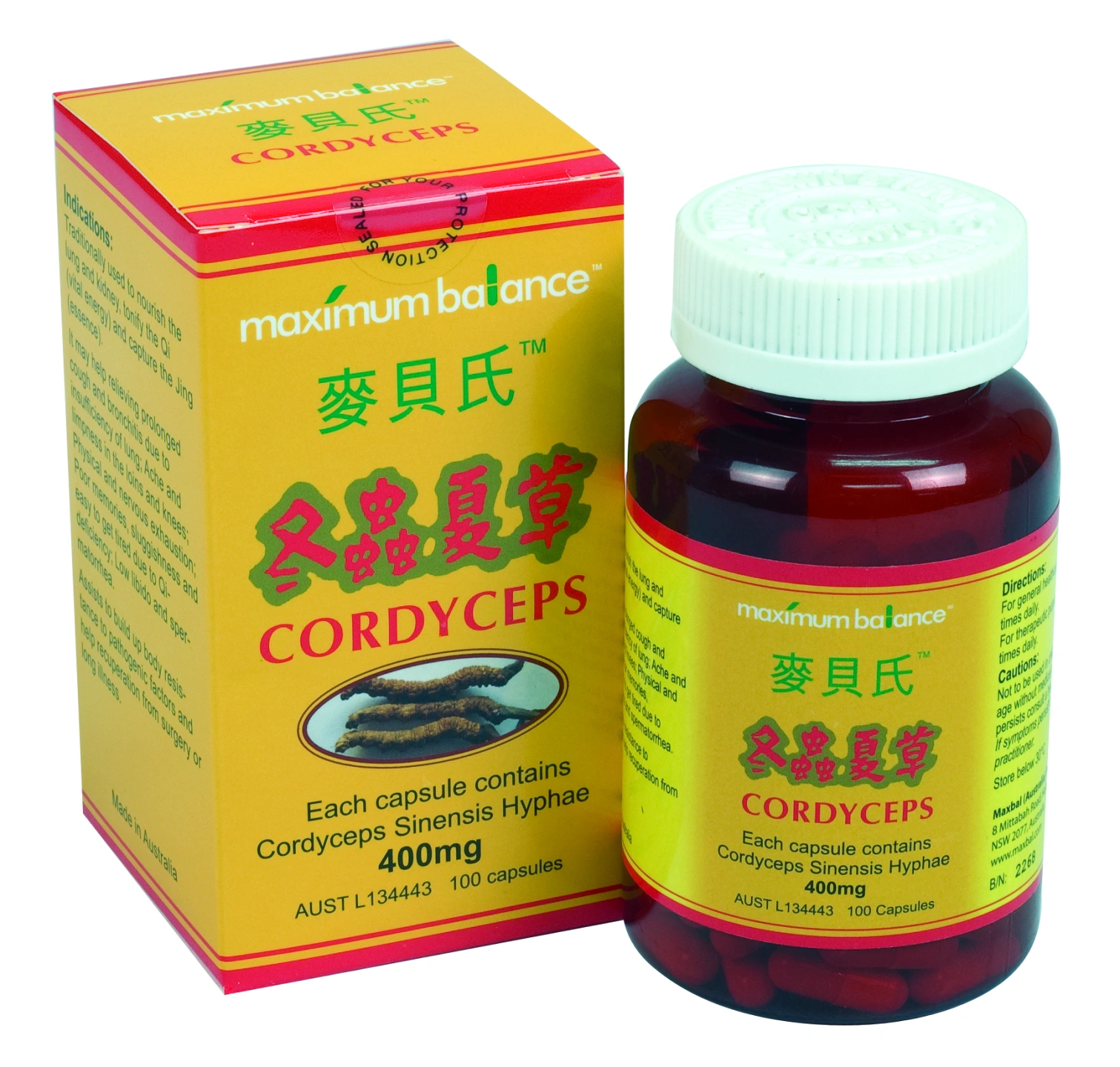
Cs-4 Cordyceps sinensis capsule
Maximum Balance® Cs-4® Cordyceps Capsules
This product contains 100% Cordyceps mycelium powder, with hard gelatin capsules as the only additional ingredient. The hard capsule shell mainly contains bovine gelatin and purified water.
Cordyceps mycelium powder, also known as fermented Cordyceps sinensis mycelium, is produced by isolating a Cordyceps strain from premium fresh wild Cordyceps collected at altitudes above 4,000 meters in Tibet. The strain is then cultivated using low-temperature deep liquid fermentation biotechnology, resulting in a high-technology Cordyceps product.
The scientific name of Cordyceps is Cordyceps sinensis, abbreviated as Cs. During the research and development of Cordyceps mycelium, researchers assigned identification numbers to more than 200 fungal strains. Based on research findings, Strain No. 4 (Paecilomyces hepiali) was shown to be the most effective and the closest to wild Cordyceps, and was therefore named Cs-4. Cs-4 is not only officially recorded in the Chinese Pharmacopoeia, but is also the only Cordyceps strain recognised by the Australian therapeutic regulatory authority. Wild Cordyceps itself has not been recognised by the Australian Therapeutic Goods Administration as a listed complementary medicine ingredient.
The purity of fermented Cordyceps mycelium powder is significantly higher than that of wild Cordyceps (containing no insect body components, making it suitable for vegetarians). The DNA fingerprint similarity (chemical composition profile) between the two exceeds 98%. The remaining approximate 2% difference may be attributed to impurities, mixed microorganisms, intestinal content, and the insect exoskeleton found in wild Cordyceps. As a result, fermented Cordyceps mycelium powder is regarded as a modern high-purity, high-safety, and highly bioavailable alternative. Its physicochemical characteristics and functional properties are considered superior and more stable.
Cs-4 Cordyceps contains concentrated and stable active constituents including cordycepic acid, cordycepin, Cordyceps polysaccharides, and adenosine, contributing to its distinctive quality and performance compared with other Cordyceps strains.
Basic Manufacturing Process
Wild Cordyceps collection (authentic source)
Raw material selection (fresh, wild, premium quality)
Strain isolation (sterile isolation and purification culture)
Character identification (authoritative identification of the Cs-4 strain)
Preparation of culture medium (specifically formulated for strain suitability)
Fermentation production (simulated wild environmental fermentation)
Drying and pulverisation (drying and milling of the mycelium)
Quality inspection and release
Indications
Cordyceps sinensis has been traditionally used in Chinese medicine to rejuvenating tonic, relieving weariness, tiredness, and feeling of weakness and reduce mild joint pain or soreness. It is also traditionally used in Chinese medicine to strengthen kidney-essence (Kidney-Jing) , warm and enrich kidney-yang, support healthy sexual function of kidney-Yang Deficiency pattern in males, as well as relieve cough in Lung-Yin Deficiency pattern.
Overseas Applications of Cs-4 Cordyceps Mycelium
Supports healthy sleep and memory function
Supports lung and upper respiratory health, including nasal sensitivity
Supports kidney health and vitality
Supports cardiovascular health
Supports liver health and natural detoxification processes
Supports immune system function
Supports recovery after illness or surgery
Supports skin health and helps reduce visible signs of photoaging
Product Category
Complementary medicine; Health food supplement
Directions of administration:
Take orally. For general healthcare, 2 capsules a time, 2 times daily.
For therapeutic purpose, 3 capsules a time, 3 times daily or follow the instruction of a healthcare professional.
Caution
Adult only. Use with caution during pregnancy, breastfeeding, and in children.
If symptoms or coughing persist, consult health professional or TCM practitioner if you are unsure if this medicine is right for you.
Storage
Store below 30°C, well-sealed and away from sunlight.
Research Papers for Fermented Cs-4 Cordyceps sinensis
1. Antifatigue and Antistress Effect of the Hot-Water Fraction from
Mycelia of Cordyceps sinensis
https://doi.org/10.1248/bpb.26.691
2. Anti-Inflammatory Effects of a Cordyceps sinensis Mycelium Culture Extract (Cs-4)
https://pubmed.ncbi.nlm.nih.gov/32899766/
3. Cordycepin inhibits UVB-induced matrix metalloproteinase
expression by suppressing the NF-κB pathway in human
dermal fibroblasts
https://pubmed.ncbi.nlm.nih.gov/19381070/
4. Cordyceps as an Herbal Drug
https://pubmed.ncbi.nlm.nih.gov/22593927/
5. The in vivo effect of Cordyceps sinensis mycelium on plasma corticosterone level
https://pubmed.ncbi.nlm.nih.gov/16141547/
6. Research Progress of Cordyceps sinensis and Its Fermented Mycelium Products on Ameliorating Renal Fibrosis by Reducing Epithelial-to-Mesenchymal Transition
https://pubmed.ncbi.nlm.nih.gov/37440993/
7. Protective effect of extract of Cordyceps sinensis in middle cerebral artery occlusion-induced focal cerebral ischemia in rats
https://pubmed.ncbi.nlm.nih.gov/20955613/
8. Cosmetic and Skincare Benefits of Cultivated Mycelia from the Chinese Caterpillar Mushroom, Ophiocordyceps sinensis (Ascomycetes)
https://pubmed.ncbi.nlm.nih.gov/30055554/
Remark: Cordyceps sinensis = Ophiocordyceps sinensis
9. Effect of Cs-4 (Cordyceps sinensis) on Exercise Performance in Healthy Older Subjects: A Double-Blind, Placebo-Controlled Trial
https://pubmed.ncbi.nlm.nih.gov/20804368/
10. Mechanism of Cordyceps sinensis and its Extracts in the Treatment of Diabetic Kidney Disease: A Review
https://pubmed.ncbi.nlm.nih.gov/35645822/
11. Enhancement of ATP generation capacity, antioxidant activity and
immunomodulatory activities by Chinese Yang and Yin tonifying herbs
https://pubmed.ncbi.nlm.nih.gov/17386115/
12. Extraction, Characterization, and Platelet Inhibitory Effects of Two Polysaccharides from the Cs-4 Fungus
https://pubmed.ncbi.nlm.nih.gov/36293463/
13. Functional study of Cordyceps sinensis and cordycepin in male reproduction: A review
https://pubmed.ncbi.nlm.nih.gov/28911537/
14. Hypocholesterolemic effect of hot-water extract from mycelia of Cordyceps sinensis
https://pubmed.ncbi.nlm.nih.gov/12520179/
15. Anticancer and antimetastatic effects of cordycepin, an active component of Cordyceps sinensis
https://pubmed.ncbi.nlm.nih.gov/25704018/
16. Extracts of Cordyceps sinensis inhibit breast cancer cell metastasis via down-regulation of metastasis-related cytokines expression
https://pubmed.ncbi.nlm.nih.gov/29253616/
17. The in vivo effect of Cordyceps sinensis mycelium on plasma corticosterone level in male mouse
https://pubmed.ncbi.nlm.nih.gov/16141547/
18. HPLC determination of massoia lactone in fermented Cordyceps sinensis mycelium Cs-4 and its anticancer activity in vitro
https://pubmed.ncbi.nlm.nih.gov/32713040/
19. Cordyceps sinensis health supplement enhances recovery from taxol-induced leukopenia
https://pubmed.ncbi.nlm.nih.gov/18367634/
20. Herbal Medicine Cordyceps sinensis Improves Health-Related Quality of Life in Moderate-to-Severe Asthma
https://pubmed.ncbi.nlm.nih.gov/28050193/
How to interprete Body Constitution with Modern Nutrition?
Body Constitution and Its Modern Nutritional Translation
The core of Hanwise Nutrition is not only to inherit ancient traditional wisdom in addressing constitutional health through dietary and nutritional solutions, but also to continuously study the relationship between traditional constitutional theory and modern nutritional science.
Through a “constitution mechanism” framework, it establishes systematic correspondences between constitutional types and modern nutritional science, physiological regulation, and metabolic function, enabling traditional constitutional theory to be understood and applied in the language of contemporary health science.
Body Constitution
Modern Nutritional & Physiological Translation
Harmonised Constitution
Healthy metabolic homeostasis / Coordinated neuro-endocrine-immune regulation / Stable nutrient utilisation efficiency
Qi Deficiency
Reduced energy metabolism efficiency / Suboptimal mitochondrial function / Lower recovery and metabolic resilience
Yang Deficiency
Reduced thermogenesis and basal metabolic activity / Weakened circulatory drive / Lower metabolic activation capacity
Yin Deficiency
Insufficient fluid regulation and cellular nourishment / Oxidative stress imbalance / Increased physiological depletion
Phlegm-Damp Constitution
Dysregulated lipid metabolism / Reduced insulin sensitivity / Excess energy storage with sluggish metabolism
Damp-Heat Constitution
Chronic low-grade inflammation / Increased hepatic and metabolic burden / Elevated glucose-lipid metabolic stress
Blood Stasis Constitution
Reduced microcirculatory efficiency / Endothelial functional imbalance / Impaired oxygen and nutrient delivery
Qi Stagnation Constitution
Neurotransmitter and stress-regulation imbalance / Heightened HPA-axis stress response / Emotion-related metabolic fluctuation
Special Diathesis Constitution
Increased immune sensitivity / Reduced barrier stability / Heightened response to environmental or dietary triggers
Further Mechanistic Interpretation
Qi Deficiency
In modern physiological understanding, this more closely relates to:
· Reduced cellular energy production
· Lower ATP generation efficiency
· Weakened recovery and adaptive capacity
Therefore, nutritional support often focuses on:
· High-quality protein
· B-vitamin support
· Mitochondrial nutrition
· Stable energy metabolism
Yang Deficiency
Its core mechanism is not merely “feeling cold,” but rather:
· Reduced metabolic activation
· Lower circulatory efficiency
· Decreased thermogenic conversion capacity
Modern nutritional parallels include:
· Basal metabolic support
· Thermogenesis and circulation enhancement
· Endocrine and metabolic activation support
Yin Deficiency
This may be interpreted as:
· Long-term physiological depletion
· Reduced antioxidant reserve
· Insufficient hydration and tissue nourishment
Nutritional emphasis therefore includes:
· Antioxidant support
· Cellular repair and recovery
· Hydration and mucosal support
· Nervous system restoration
Phlegm-Damp Constitution
Its essence is not simply obesity, but rather:
· Excess energy storage with inefficient utilisation
· Dysregulated glucose and lipid metabolism
· Chronic metabolic accumulation
Modern nutritional approaches often focus on:
· Improving insulin sensitivity
· Low-inflammatory dietary strategies
· Enhancing metabolic flexibility
· Gut microbiome regulation
Damp-Heat Constitution
This constitution may correspond to:
· Chronic inflammatory tendencies
· Increased metabolic waste burden
· Elevated liver and digestive metabolic stress
Modern nutritional support commonly emphasises:
· Anti-inflammatory nutrition
· Hepatic metabolic support
· Glucose and lipid balance
· Oxidative stress regulation
Blood Stasis Constitution
Modern parallels may include:
· Reduced microcirculatory efficiency
· Impaired vascular dynamics
· Lower tissue oxygenation and nutrient exchange
Nutritional priorities often include:
· Vascular health support
· Circulatory enhancement
· Antioxidant and endothelial protection
· Improved metabolic waste clearance
Qi Stagnation Constitution
This is often associated with:
· Chronic stress exposure
· Dysregulated nervous system tension
· Interaction between emotional state and metabolism
Relevant nutritional strategies include:
· HPA-axis modulation
· Neurotransmitter-supportive nutrients
· Stress resilience support
· Sleep and mood regulation
Special Diathesis Constitution
This more closely resembles:
· Heightened immune sensitivity
· Reduced environmental adaptability
· Fluctuating barrier and immune tolerance stability
Modern nutritional support may focus on:
· Gut barrier integrity
· Immune tolerance support
· Low-reactivity antioxidant nutrition
· Environmental adaptation support
The Core Value of Hanwise Nutrition
Hanwise Nutrition does not regard constitutional theory as a symbolic or purely traditional concept. Instead, the constitution is interpreted as a new perspective and tool that addresses individuals of:
A long-term functional tendency in inheritance, metabolism, recovery, immunity, circulation, neurological regulation, and environmental adaptability.
Accordingly, constitutional nutrition is not intended to replace modern nutritional science, but rather to extend it by introducing:
· Additional unseen parameters
· Individual variability
· Functional tendency analysis
· Long-term adaptive regulation
This enables nutritional support to evolve from “the single nutritional approach” toward “combined and targeted nutritional alignment based on individual functional tendencies.”
Privacy Policy
Maxbal (Australia) Pty Ltd (“Maxbal”, “we”, “our” or “us”) respects your privacy and is committed to protecting your personal information in accordance with the Privacy Act 1988 (Cth) and the Australian Privacy Principles (“APPs”).
This Privacy Policy explains how we collect, use, disclose, store and protect your personal information when you visit or use our website at www.maxbal.com.
1. Collection of Personal Information
We may collect personal information that is reasonably necessary for our business activities, including:
your name;
email address;
phone number;
billing and shipping address;
payment and transaction details;
account login information;
communications and enquiries submitted through our website;
marketing preferences; and
technical information such as IP address, browser type, device information and website usage data.
We may collect personal information when you:
visit or use our website;
purchase products or services;
subscribe to newsletters or marketing communications;
contact us via forms, email or telephone; or
participate in promotions, surveys or customer feedback activities.
2. Health-Related Information
We do not intentionally collect sensitive health information unless you voluntarily provide it to us through enquiries, customer support communications or related interactions.
Any health-related information voluntarily provided by you will be handled in accordance with applicable privacy laws and treated confidentially.
3. Use of Personal Information
We may use your personal information for purposes including:
providing products and services;
processing orders and payments;
delivering customer support;
responding to enquiries;
improving website functionality and user experience;
conducting internal business administration;
sending marketing communications where permitted by law;
complying with legal obligations; and
protecting our legal rights and preventing fraud or misuse.
4. Direct Marketing
We may send you marketing communications about our products, services, promotions or educational content where permitted by applicable law.
You may opt out of receiving marketing communications at any time by:
clicking the unsubscribe link in our emails; or
contacting us directly using the details below.
5. Disclosure of Personal Information
We may disclose your personal information to:
payment processors and financial institutions;
delivery and logistics providers;
IT service providers, hosting providers and website administrators;
professional advisers including accountants, auditors and lawyers;
marketing and analytics providers; and
government authorities or regulators where required by law.
We do not sell personal information to third parties.
6. Overseas Disclosure
Some of our service providers may store or process data outside Australia, including cloud hosting, analytics or email service providers.
Where personal information is disclosed overseas, we take reasonable steps to ensure such providers handle your information in accordance with Australian privacy laws.
7. Cookies and Analytics
Our website may use cookies, analytics tools and similar technologies to:
improve website performance;
understand website traffic and usage patterns;
personalise user experience; and
support marketing and advertising activities.
You may adjust your browser settings to refuse cookies, although some website functions may not operate properly.
8. Security of Personal Information
We take reasonable steps to protect personal information from misuse, interference, loss, unauthorised access, modification or disclosure.
These measures may include:
secure servers and hosting environments;
restricted staff access;
encryption and cybersecurity protections; and
secure payment processing systems.
However, no method of electronic transmission or storage is completely secure, and we cannot guarantee absolute security.
9. Access and Correction
You may request access to personal information we hold about you and request corrections if the information is inaccurate, incomplete or outdated.
Requests should be made using the contact details below. We may require verification of identity before processing requests.
10. Retention of Information
We retain personal information only for as long as reasonably necessary for business, legal, accounting or regulatory purposes.
When personal information is no longer required, we take reasonable steps to securely destroy or de-identify it.
11. Third-Party Websites
Our website may contain links to third-party websites. We are not responsible for the privacy practices, policies or content of third-party websites.
Users should review the privacy policies of those external websites separately.
12. Children’s Privacy
Our website and products are not directed toward children under 18 years of age. We do not knowingly collect personal information from children.
13. Changes to This Privacy Policy
We may update this Privacy Policy from time to time to reflect changes in legal requirements, business practices or website functionality.
14. Contact Us
If you have any questions, requests or complaints regarding this Privacy Policy or the handling of your personal information, please contact: info@maxbal.com
Website Disclaimer
The information contained on this website is provided by Maxbal (Australia) Pty Ltd for general informational purposes only.
While we endeavour to keep the information accurate and up to date, Maxbal (Australia) Pty Ltd makes no representations or warranties, express or implied, regarding the completeness, accuracy, reliability, suitability, availability or timeliness of the website or the information, products, services or related materials contained on this website for any purpose.
To the maximum extent permitted by law:
This website and its contents are provided on an “as is” and “as available” basis;
We do not warrant that the website will be uninterrupted, error-free, secure or free from viruses or other harmful components; and
We do not warrant that the information on this website is current, complete, accurate or non-misleading.
Nothing contained on this website constitutes medical, healthcare, nutritional, therapeutic, legal or professional advice, nor is it intended to substitute for consultation with a qualified healthcare professional. You should always seek independent professional advice appropriate to your personal circumstances before relying on any information contained on this website.
Any statements relating to wellness, traditional use, food supplements or herbal ingredients are provided for general educational purposes only and are not intended to diagnose, treat, cure or prevent any disease.
Limitation of Liability
To the maximum extent permitted by applicable law, Maxbal (Australia) Pty Ltd excludes all liability for any loss or damage arising out of or in connection with the use of, or reliance upon, this website or any linked website.
This includes, without limitation:
indirect, incidental, special or consequential loss or damage;
loss of business, revenue, profits, anticipated savings, goodwill or opportunity; and
loss of or damage to data or information.
Third-Party Links
This website may contain links to external websites operated by third parties. Maxbal (Australia) Pty Ltd does not control, endorse or accept responsibility for the content, availability, changes or privacy practices of any third-party websites.
Intellectual Property
Unless otherwise stated and publicly available research papers, all content on this website, including text, graphics, logos, images and branding, is the property of Maxbal (Australia) Pty Ltd and is protected by applicable intellectual property laws.
No Personal Liability
You agree that any claim arising from or relating to the use of this website must not be brought against its directors, officers, employees, contractors or agents personally in any circumstances.
Governing Law
This disclaimer and your use of this website are governed by the laws of New South Wales, Australia. Any disputes arising in connection with this website shall be subject to the exclusive jurisdiction of arbitration in New South Wales.

Prduct feature
Category 1: TGA Listed Complementary Medicines
Quality
We uphold the highest standards in every stage of production. All raw materials are rigorously authenticated, carefully selected, and graded to ensure they are free from adulteration and contamination. Each herbal extract undergoes re-validation and quantitative analysis of its active constituents by a TGA-licensed independent laboratory before approval for use.
Manufacturing is conducted in a cGMP-certified facility accredited by the Australian government, ensuring full compliance with the standards of the British Pharmacopoeia, European Pharmacopoeia, and the TGOs (Therapeutic Goods Orders of the TGA). Our unwavering commitment to sustainability, traceability, consistency, and credibility underpins everything we do.
Safety
All ingredients used in our formulations have a long history of traditional use with well-established safety profiles. Before any product development begins, comprehensive literature reviews on toxicological data are undertaken to assess safety.
We maintain rigorous pharmacovigilance programs that monitor, manage, and analyse any potential safety concerns. Combined with stringent quality assurance throughout the entire production and supply chain, this ensures product safety is consistently maintained and maximised.
Efficacy
We recognise that effectiveness is central to customer health and product longevity. Our commitment to efficacy means we only develop and market products with demonstrated therapeutic benefits. With little reliance on advertising or promotion, our brand has continued to thrive for over two decades—an achievement driven entirely by customer satisfaction and word-of-mouth recommendations.
Research
Although traditional indications and usages are listed and approved by the Australian health authorities, we care more about the evidence-based scientific data to back up its modern applications and its potential added values. Published essays and papers are selected and grouped at one spot for the convenience of interested individuals as a reference.
Category 2: Hanwise Nutrition Series
Constitutional Nutrition Formulas:
A precision and targeted nutrition solution for eight different body types (body constitutions) based on thousands of years of wisdom and methodology, coupled with modern QA principles to provide the most useful, tasteful and fundamental care to people’s health and well-being.
The Instant Herbal Tea Powders are formulated for the common body-types as below:
1. Qi-Xu (Qi-deficiency constitution)
2. Yang-Xu (Yang-deficiency constitution)
3. Yin-Xu (Yin-deficiency constitution)
4. Tan-Shi (Phlegm-damp constitution)
5. Shi-Re (Damp-heat constitution)
6. Xue-Yu (Blood-stasis constitution)
7. Qi-Yu (Qi-stagnation constitution)
8. Te-Bing (Special diathesis constitution)
FSANZ compliance
The constitutional nutrition series is carefully formulated and manufactured in Australia in cGMP-accredited facilities, with additional alignment with FSANZ standards for materials, safety, processing controls, packaging, and presentation.
Category 3: Evidence-Informed Ingredients with Traditional Heritage
Access a carefully selected portfolio of traditional wellness ingredients enhanced by modern scientific understanding. Designed for manufacturers, formulators, and distributors, this category showcases quality-driven ingredients that bridge cultural heritage, nutritional science, and market innovation.
Enquiries are welcome for your specific requirements and orders.

where to buy
Our products are proudly distributed throughout Australia by Beijing Tong Ren Tang Australia through its network of Traditional Chinese Medicine (TCM) clinics and retail stores located across major cities on the eastern coast. Products are also available online via the Beijing Tong Ren Tang Australia website www.btrt.com.au and through selected authorised retailers.
For customers in regional or remote areas, simply email your desired order items to syd@tongrentang.com.au. Their customer service team will provide a quotation, including freight costs, for your confirmation. Once approved, payment can be securely completed by credit card through a phone verification process. For your security and privacy, the store does not retain any credit card details.
Customers are also welcome to connect with their local Beijing Tong Ren Tang Australia store via WeChat for health and wellness updates, product information, and more convenient communication.
Major retailing locations and contacts:
Sydney CBD:
Shop 18, 61-79 QUAY ST, HAYMARKET, NSW 2000
syd@tongrentang.com.au I Ph: 02 9304 0052 I WeChat: btrt_syd
Chatswood:
Shop 1/16 Anderson Street, Chatswood, NSW 2067
chatswood@tongrentang.cont.au I Ph: 02 9904 6663 I WeChat: BTRTAU-SERVICE-1
Burwood:
230 Burwood Road, Burwood, NSW 2134
bwd@tongrentang.com.au | Ph: 02 8540 0606 |WeChat: Bwd-TCM
Hurstville:
Shop 1, 293-295 Forest Road, Hurstville, NSW 2220
hvb@tongrentang.com.au | Ph: 02 9580 8380 |WeChat: HurstvilleTCM
Cabramatta:
Shop 9-10, 193 Railway Parade, Cabramatta, NSW 2166
cb@tongrentang.com.au | Ph: 02 8764 3025 | WeChat: BTRTAU-SERVICE
Brisbane:
Shop 21, 342 McCullough St, Sunnybank QLD 4109
bb@tongrentang.com.au I Ph: 07 3423 8381 I WeChat: TCM4109
Melbourne:
108 Little Burke St, Melbourne, VIC 3000
melbourne@tongrentang.com.au I Ph: 03 9077 0017 I WeChat: a907700l7
Box Hill:
Shop 1, 2A Cambridge St, Box Hill, VIC 3125
bh@tongrentang.coin.au I Ph: 03 9041 0556 I WeChat: A90410556
Glen Warerley:
77 Railway Parade Noah, Glen Waverley, VIC 3150
gw@tongrentang.coin.au I Ph: 03 9856 7067 I WeChat: TRTglen
Nourish With Wisedom, Balance From Within


中文摘要
MAXBAL司标LOGO诠释
Maxbal司标源于 “Maximum Balance” —— “最佳平衡” 的核心理念。
司标Logo整体设计以“平衡、自然、快乐、圆满”为精神核心,不仅是一枚品牌标识,更是一种关于健康哲学的表达。
Logo中央的天平,象征人体内在的平衡与秩序。MAXBAL认为,真正的健康并非单纯没有疾病,而是脏腑功能、情绪状态以及人与社会、人与自然之间达到和谐稳定的状态。当失去平衡,健康便会受到影响;而恢复平衡,便是回归健康的开始。
围绕天平的谷穗与叶环,寓意自然生命力与丰盛能量,代表品牌以天然汉方食养智慧为核心,通过食疗、食养及自然调理方式,帮助身体建立自我修复与再平衡能力。这不仅体现对自然的尊重,也象征健康源于顺应自然规律。
顶部的皇冠元素,则代表“健康的最高境界”。它寓意人在达到身体、情绪与精神和谐统一之后,所呈现出的最佳生命状态——一种由内而外散发的平衡、自信与从容。
而整个Logo最独特之处,在于其隐藏的“人脸”设计。细看之下,天平本身宛如一张脸庞,传递出MAXBAL的重要理念:
“平衡,是健康的重要根源;健康,是人生的宝贵财富。”
Hanwise Nutrition™ 汉方食养
“汉方食养” 以千年汉医汉方为根基,坚守100%药食同源选材标准, 循古法性味归经、君臣佐使,以纯粹本草之力,调节身体能量与内在平衡。
我们在现代营养学之外,回归东方食养本源,唤醒元气、调和脏腑、滋养根本,让身体在温和滋养中回归稳态,由内而外,焕发本真活力。
汉方食养 - 智慧滋养 · 恢复本真
体质类别与现代营养学关系
Hanwise Nutrition 的核心,不单是传承古老传统智慧对待体质问题的食养解决方案,也不断研究传统体质与现代营养学的关系,并通过 “体质机制(constitution mechanism)” 与现代营养科学、生理调节及代谢功能之间建立对应联系,使传统体质理论能够以现代健康语言被理解与应用。
体质概念
现代营养学与生理机制对应逻辑
平和质
代谢稳态良好 / 神经-内分泌-免疫协调平衡 / 营养利用效率稳定
气虚质
能量代谢效率偏低 / 线粒体功能支持不足 / 基础代谢与恢复能力下降
阳虚质
产热能力与基础代谢偏低 / 循环动力不足 / 内分泌活性与能量激活能力减弱
阴虚质
体液调节与细胞滋养不足 / 抗氧化系统失衡 / 应激消耗增加
痰湿质
脂质代谢紊乱 / 胰岛素敏感性下降 / 能量储存过剩与代谢迟缓
湿热质
慢性低度炎症倾向 / 肝胆代谢负担增加 / 糖脂代谢压力偏高
血瘀质
微循环效率下降 / 血管内皮功能失衡 / 氧与营养输送效率降低
气郁质
神经递质与压力调节失衡 / HPA轴应激反应增强 / 情绪相关代谢波动
特禀质
免疫敏感性偏高 / 屏障功能稳定性不足 / 对环境或食物刺激反应增强
机制解读(Mechanistic Interpretation)
气虚质(Qi Deficiency)
更接近现代所说的:
细胞能量供应不足
ATP生成效率下降
恢复能力与适应能力偏弱
因此在现代营养学中,更强调:
优质蛋白
B族维生素
线粒体营养支持
稳定能量代谢
阳虚质(Yang Deficiency)
其核心并非单纯“怕冷”,而是:
代谢激活能力不足
循环效率偏低
热量转化能力下降
对应现代方向包括:
基础代谢支持
循环与热生成(thermogenesis)
内分泌与代谢激活营养
阴虚质(Yin Deficiency)
现代可理解为:
长期消耗状态
抗氧化储备下降
水分与组织滋养不足
因此更强调:
抗氧化营养
细胞修复
水分与黏膜支持
神经系统恢复
痰湿质(Phlegm-Damp)
其本质并不仅仅是“肥胖”,而更接近:
能量过剩但利用效率低
糖脂代谢调节失衡
慢性代谢堆积
现代营养学通常对应:
胰岛素敏感性管理
低炎症饮食
代谢灵活性提升
肠道菌群调节
湿热质(Damp-Heat)
可映射为:
炎症倾向
代谢废物负担增加
肝胆与消化代谢压力偏高
现代常对应:
抗炎营养策略
肝脏代谢支持
糖脂平衡管理
氧化压力控制
血瘀质(Blood Stasis)
现代更接近:
微循环效率下降
血流动力学不佳
组织供氧与营养交换效率降低
因此更强调:
血管健康
循环支持
抗氧化与内皮保护
代谢废物清除效率
气郁质(Qi Stagnation)
现代机制往往与:
长期压力
神经系统张力失衡
情绪与代谢互相影响
相关方向包括:
HPA轴调节
神经递质营养
压力恢复能力
睡眠与情绪支持
特禀质(Special Constitution)
更类似:
免疫敏感性偏高
环境适应稳定性不足
屏障功能易波动
现代营养支持重点:
肠道屏障
免疫耐受
抗氧化与低刺激营养
环境适应支持
“汉方食养”的核心价值
汉方食养Hanwise Nutrition 推崇将 “体质” 视为一种科学发现,并从不同视角将其理解为个体在遗传,代谢、恢复、免疫、循环、神经调节与环境适应层面的长期功能偏向(偏差)。因此,“体质食养”的意义,并非替代现代营养学,而是在现代营养学的基础上:
增加现代营养学“看不见”维度的干预
增加“个体差异”关切
增加“功能偏向”纠正
增加“长期动态“调节
这使得营养支持能够从:“单一的营养方案”演变为:“联合的并基于个体功能倾向的综合性、针对性的营养调配”。
九种体质辨认歌
平和质:精力旺,很健康,很灿烂
气虚质:免疫差,易疲乏,常虚喘
阳虚质:手脚凉,全身冷,不耐寒
阴虚质:水缺乏,五心热,口咽干
痰湿质:身体胖,大肚腩,油光脸
湿热质:易长痘,常口臭,大便黏
血瘀质:血粘稠,易忘事,常长斑
气郁质:很脆弱,常郁闷,多伤感
特禀质:易过敏,常喷嚏,起风团
Maximum Balance® 麦贝氏Cs-4® 冬虫夏草胶囊
本品含100% 冬虫夏草菌粉,其余辅料只有硬胶囊。硬胶囊主要成分包含(牛骨)明胶,自然水分等。澳大利亚治疗品管理局TGA批准号码:AUSTL134443, 于2007年上市销售。
冬虫夏草菌丝体即发酵冬虫夏草菌粉,是从西藏海拔4000米以上最优质的新鲜冬虫夏草中分离得到冬虫夏草菌株,经低温深层液体生物发酵技术培养所得到的冬虫夏草高科技产品。
冬虫夏草的学名是 Cordyceps sinensis , 简称Cs。在虫草菌丝体的研发过程中,研究人员把200多种菌株分别编号。根据研究结果,4号菌种(蝙蝠蛾拟青霉)证明最有效,并最接近野生虫草,称之为Cs-4。不但被《中国药典》收录认可,也是澳洲药管局唯一认可的冬虫草菌种。而野生冬虫夏草尚未被澳洲治疗品管理局认可为辅助药成分。
发酵冬虫夏草菌粉的纯净度要远远高于野生冬虫夏草(没有虫,食素者放心),两者的DNA指纹图谱(化学成分)相似度达到98%以上,其中大约2%是可能是野生冬虫夏草杂质、杂菌及肠道,虫体表皮的原因。所以发酵冬虫夏草菌粉属于高纯度、高安全性,高吸收性的现代人选择,其理化指标和药理药性更优。Cs-4虫草成分包括:虫草酸,虫草素,虫草多醣,腺苷等,属高浓度及高稳定性,功效更为显著,非其他虫草菌种可以媲美的。
基本工艺流程:
原野生虫草采集 ( 正品 ) ---- 原料挑选 ( 新鲜,野生,优质)----菌种分离 (无菌分离和纯化培养) ---- 性状鉴定 (Cs-4菌种的权威鉴定) --- 配制培养液( 菌种适用性的专门配制)----发酵生产 (模拟野生环境发酵) ---- 干燥粉粹( 菌丝体的干燥粉碎) ----检验放行。
Cs-4 虫草菌丝体在海外应用的人群包括:
1. 改善睡眠, 提高记忆力
2. 补肺,上呼吸道,鼻敏感
3. 补肾,壮阳,肾功能低下
4. 促进心脏及血管健康
5. 促进肝脏健康,排毒
6. 增强身体抵抗力
7. 病后,手术后康复
8. 美肤,美颜,延缓光老化
用途:辅助药品;保健品
服法:温开水或淡盐水送服。一般保健:早晚各2粒;治疗用途:早晚或早中晚各3粒。
慎用:孕妇、哺乳期妇女及儿童。
MAXBAL产品主要销售渠道:
北京同仁堂澳大利亚中医药连锁门店及授权经销商(查询info@maxbal.com);您可以在同仁堂官网 www.btrt.com.au 订购,或电邮到:
或莅临同仁堂门店或加店面微信联系:
Sydney CBD:
Shop 18, 61-79 QUAY ST, HAYMARKET, NSW 2000
syd@tongrentang.com.au I Ph: 02 9304 0052 I WeChat: btrt_syd
Chatswood:
Shop 1/16 Anderson Street, Chatswood, NSW 2067
chatswood@tongrentang.cont.au I Ph: 02 9904 6663 I WeChat: BTRTAU-SERVICE-1
Burwood:
230 Burwood Road, Burwood, NSW 2134
bwd@tongrentang.com.au | Ph: 02 8540 0606 |WeChat: Bwd-TCM
Hurstville:
Shop 1, 293-295 Forest Road, Hurstville, NSW 2220
hvb@tongrentang.com.au | Ph: 02 9580 8380 |WeChat: HurstvilleTCM
Cabramatta:
Shop 9-10, 193 Railway Parade, Cabramatta, NSW 2166
cb@tongrentang.com.au | Ph: 02 8764 3025 | WeChat: BTRTAU-SERVICE
Brisbane:
Shop 21, 342 McCullough St, Sunnybank QLD 4109
bb@tongrentang.com.au I Ph: 07 3423 8381 I WeChat: TCM4109
Melbourne:
108 Little Burke St, Melbourne, VIC 3000
melbourne@tongrentang.com.au I Ph: 03 9077 0017 I WeChat: a907700l7
Box Hill:
Shop 1, 2A Cambridge St, Box Hill, VIC 3125
bh@tongrentang.coin.au I Ph: 03 9041 0556 I WeChat: A90410556
Glen Warerley:
77 Railway Parade Noah, Glen Waverley, VIC 3150
gw@tongrentang.coin.au I Ph: 03 9856 7067 I WeChat: TRTglen